
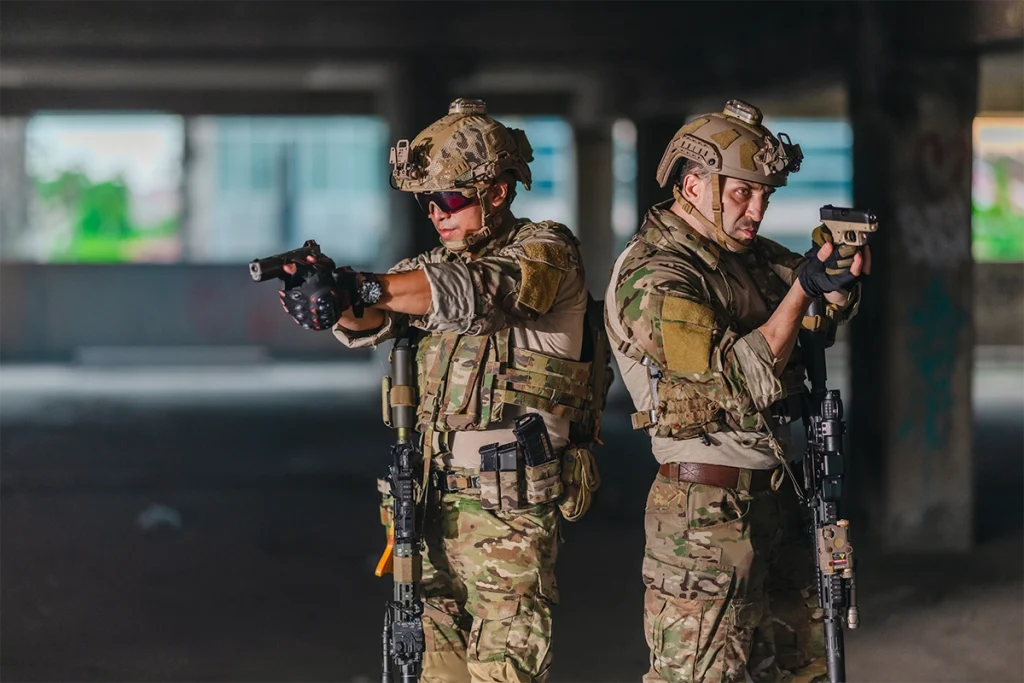
A rifle is one of the fundamental pieces of equipment carried by military and law-enforcement personnel, but the weapon itself is only one part of a complete system. How it is carried, secured and positioned during movement is equally important. This is why choosing the right weapon sling can have a significant impact on the overall ergonomics of a tactical loadout.
A good sling should provide the right balance between freedom of movement, weapon retention and comfort during extended use. A lightweight carbine creates different requirements than a weapon used in confined environments, while a heavier machine gun places considerably greater demands on its carrying system.
What types of weapon slings are available, and what should be considered when choosing the right solution?
Why Does the Right Weapon Sling Matter?
A weapon sling should not be regarded simply as a strap used to carry a firearm. In a properly configured loadout, it becomes an integral part of the equipment system.
Its primary role is to keep the weapon connected to the user when one or both hands are needed for other tasks — handling equipment, communicating, moving through obstacles or performing other activities.
At the same time, the weapon should remain in a stable and predictable position. A properly selected sling can also help reduce fatigue during prolonged carrying, particularly when the weight of the weapon increases due to optics, lights and other accessories.
For this reason, a sling should be selected not only for a specific weapon, but also for its intended use and the rest of the user’s equipment.
Single-Point Slings – Freedom of Movement
A single-point sling attaches to the weapon at one location, usually toward the rear of the firearm.
The primary advantage of this configuration is freedom of movement. The design is relatively simple and allows the weapon to move easily around the user’s body.
However, a single attachment point provides less stabilization once the weapon is released. During running, climbing or other dynamic movement, the rifle may move more than it would with a two-point sling.
Single-point slings therefore tend to suit specific configurations in which freedom of movement takes priority over maximum stability during prolonged movement.
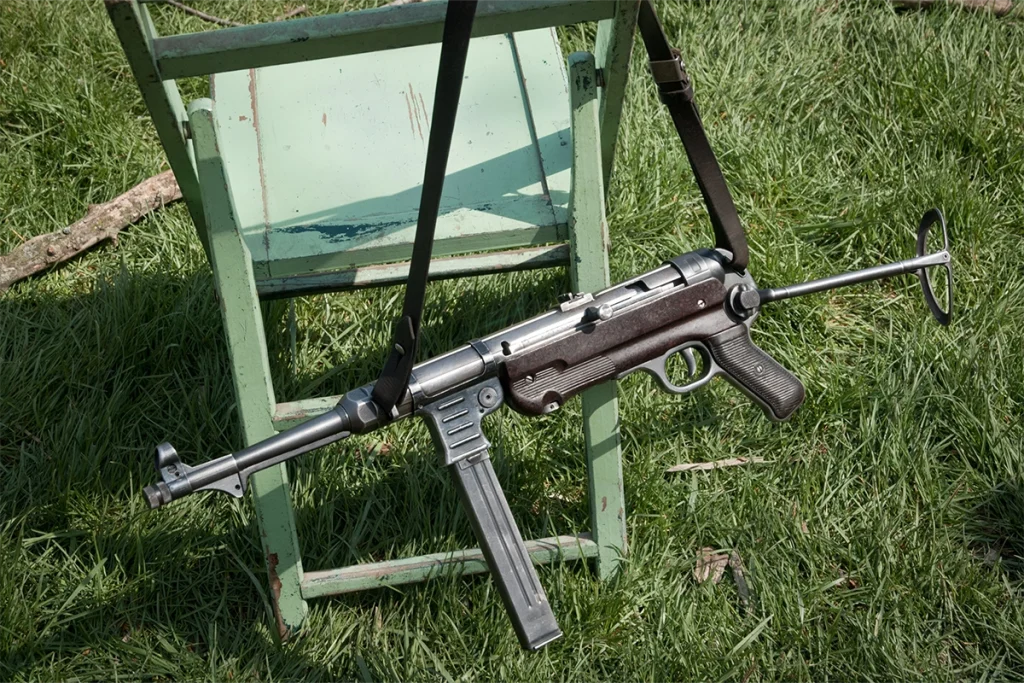
Two-Point Slings – A Versatile Solution
Two-point slings connect to the weapon at two separate attachment points. They are among the most versatile solutions used with modern rifles and carbines.
Two points of support make it easier to stabilize the weapon against the body, both during movement and when the user needs to free both hands.
Modern two-point slings frequently incorporate quick-adjust systems. This allows the user to tighten the sling while moving or transporting the weapon and loosen it when additional freedom is required.
The combination of stability, simplicity and adjustability makes the two-point design suitable for a wide range of equipment configurations.
Three-Point Slings – A More Complex Design
Three-point slings were widely used for many years as a method of maintaining weapon retention and stability.
Their construction incorporates an additional section of webbing running alongside the firearm. This offers additional positioning and adjustment options but also introduces more material around the weapon.
As quick-adjust two-point systems have developed, three-point slings have become less common. They can still be found, however, in specific configurations where users prefer this particular method of carrying a weapon.
Machine Guns Require a Different Approach
Heavier weapon systems place significantly greater demands on a sling.
A machine gun, together with ammunition and additional equipment, can create considerably more load than a standard carbine. In these conditions, the design of the carrying system and the way it distributes weight become particularly important.
Key factors may include:
- width of the load-bearing section,
- weight distribution,
- webbing strength,
- stitching quality,
- durability of attachment hardware,
- comfort during extended use,
- ease of adjustment while wearing gloves.
A wider load-bearing section can help reduce concentrated pressure and improve comfort during prolonged movement.
For this reason, slings intended for heavier weapons should be selected with particular attention to the loads they are expected to carry.
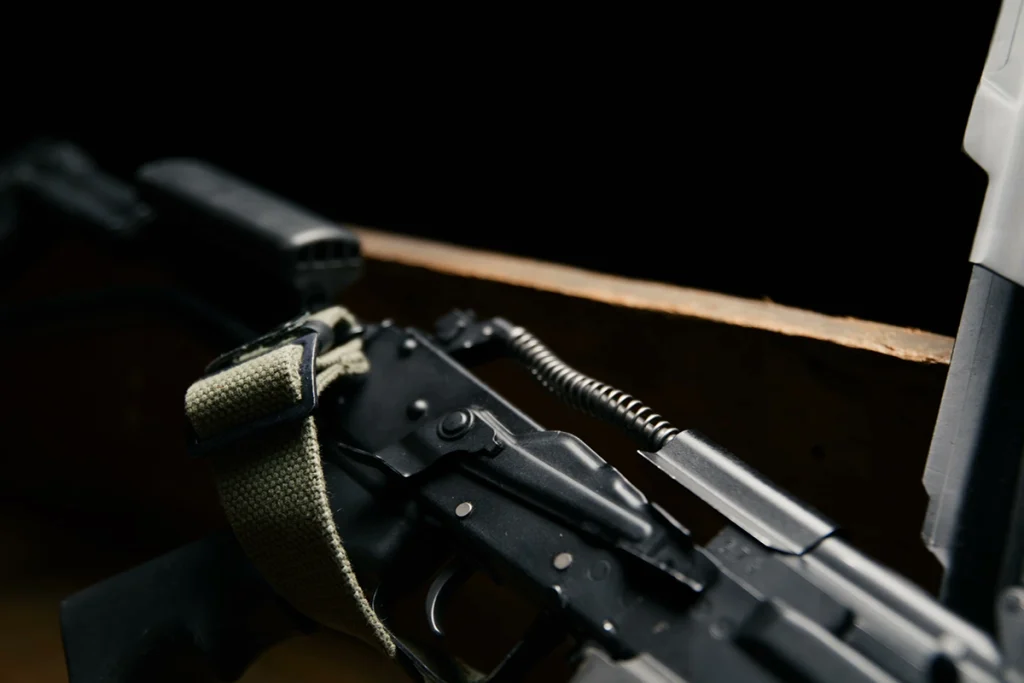
Materials and Construction – Simple Design, Demanding Requirements
A weapon sling may appear to be a relatively simple piece of equipment, but its performance depends on the quality of several key components.
The foundation is durable textile webbing capable of withstanding repeated flexing, tension and intensive use. Adjusters, buckles, stitching and weapon attachment components are equally important.
For professional equipment, it is also worth considering how the material performs when exposed to moisture, mud, dust or low temperatures.
A well-designed sling should remain as simple and functional as possible. Excess loose webbing and unnecessary hardware can interfere with other equipment and reduce overall usability.
Sling Attachment Options
Even a well-made sling will not function properly if its attachment method is not compatible with the weapon platform.
Depending on the design of the firearm and its accessories, various attachment solutions can be used, including:
- webbing loops,
- hooks,
- metal mounting hardware,
- quick-detach systems,
- dedicated attachment points integrated into the weapon.
There is no single mounting method that is ideal for every application.
The choice should take into account the available mounting points, weapon type, intended use and the need for rapid sling removal.
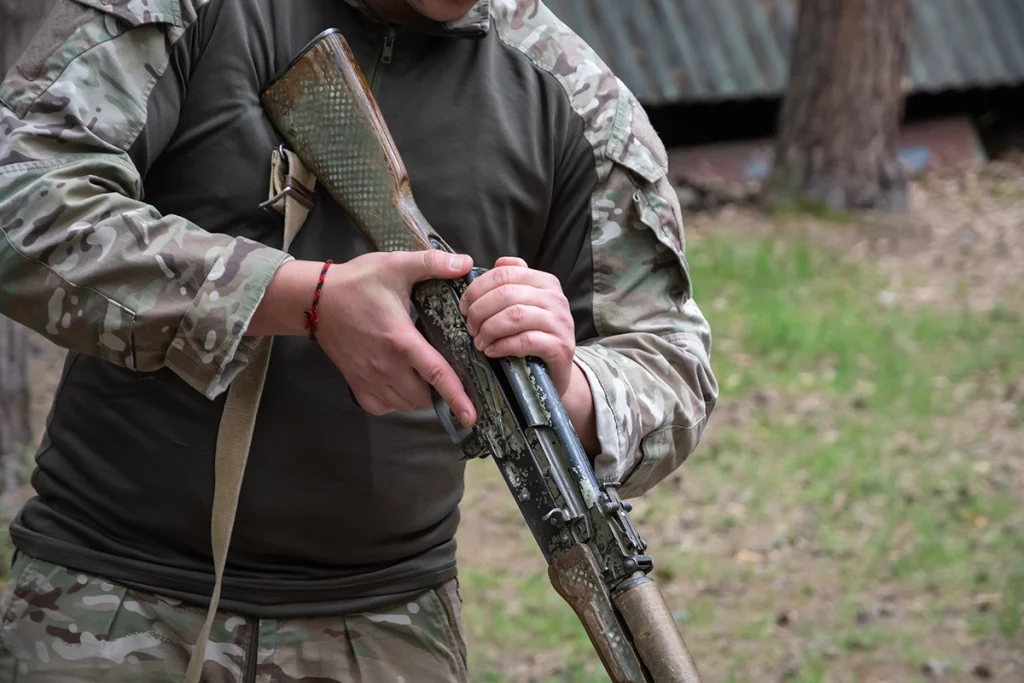
A Sling as Part of the Complete Equipment System
A weapon sling does not function independently from the rest of the loadout.
A plate carrier, ballistic vest, backpack, hydration system, radio or additional pouches can all affect how the sling sits around the user’s body.
A poorly configured system may cause the sling to catch on other equipment, interfere with adjustment or restrict movement.
For this reason, a sling should be evaluated not only together with the weapon, but as part of the user’s complete equipment configuration.
Comfort Is Part of Functionality
In professional equipment, comfort should not be treated as a secondary concern.
A poorly selected sling may create pressure points, restrict movement or interfere with a vest or backpack. During short-term use these issues may appear minor, but over several hours they can become significantly more noticeable.
When selecting a sling, it is therefore worth considering:
- adjustment range,
- ease of length adjustment,
- webbing width,
- operation while wearing gloves,
- positioning of buckles and adjusters,
- compatibility with a plate carrier or tactical vest,
- adaptability to different clothing layers.
A good sling should perform its role without requiring unnecessary attention from the user.
How to Choose the Right Sling
There is no single sling that is suitable for every weapon and every application.
Before making a choice, several basic questions should be considered.
What type of weapon will be used?
A lightweight carbine creates different requirements than a heavier machine gun.
How long will the weapon be carried?
Comfort and load distribution become increasingly important during extended use.
What other equipment does the user wear?
The sling should work effectively with a vest, plate carrier, backpack and other load-bearing equipment.
What attachment points are available on the weapon?
These determine which mounting solutions can be used.
Is freedom of movement or weapon stability the greater priority?
This is one of the fundamental considerations when choosing between sling designs.
Only by considering the complete equipment system can the appropriate sling be selected for a specific application.
A Small Component with a Major Role
A rifle or machine gun sling is a relatively simple piece of equipment, but it can have a significant effect on the ergonomics of the complete system.
Single-point slings provide a high degree of freedom of movement. Two-point systems offer a practical balance between mobility, stability and comfort. Heavier weapon systems, meanwhile, require solutions designed with greater loads and extended use in mind.
In professional tactical equipment, the effective integration of individual components is often what determines whether the entire system works as a coherent whole.
Looking for a weapon sling suited to a specific platform and equipment configuration? Contact EU Shields to select a solution tailored to the user’s requirements and intended application.